Where do great rivers begin?

The answer is not found in the grandeur of “the Yellow River descending from heaven,” but on the alpine meadows of Yulshul, where countless streams wind across the land like capillaries, converging into the Three-River Headwaters that nourish China.
Inside the Three-River Headwaters Exhibition Hall, more than 6,700 small bottles preserve memories of the headwaters. Among them are samples of clear spring water, as well as handfuls of dry earth collected from springs that have already disappeared. A river is born from countless drops, yet it remains fragile.
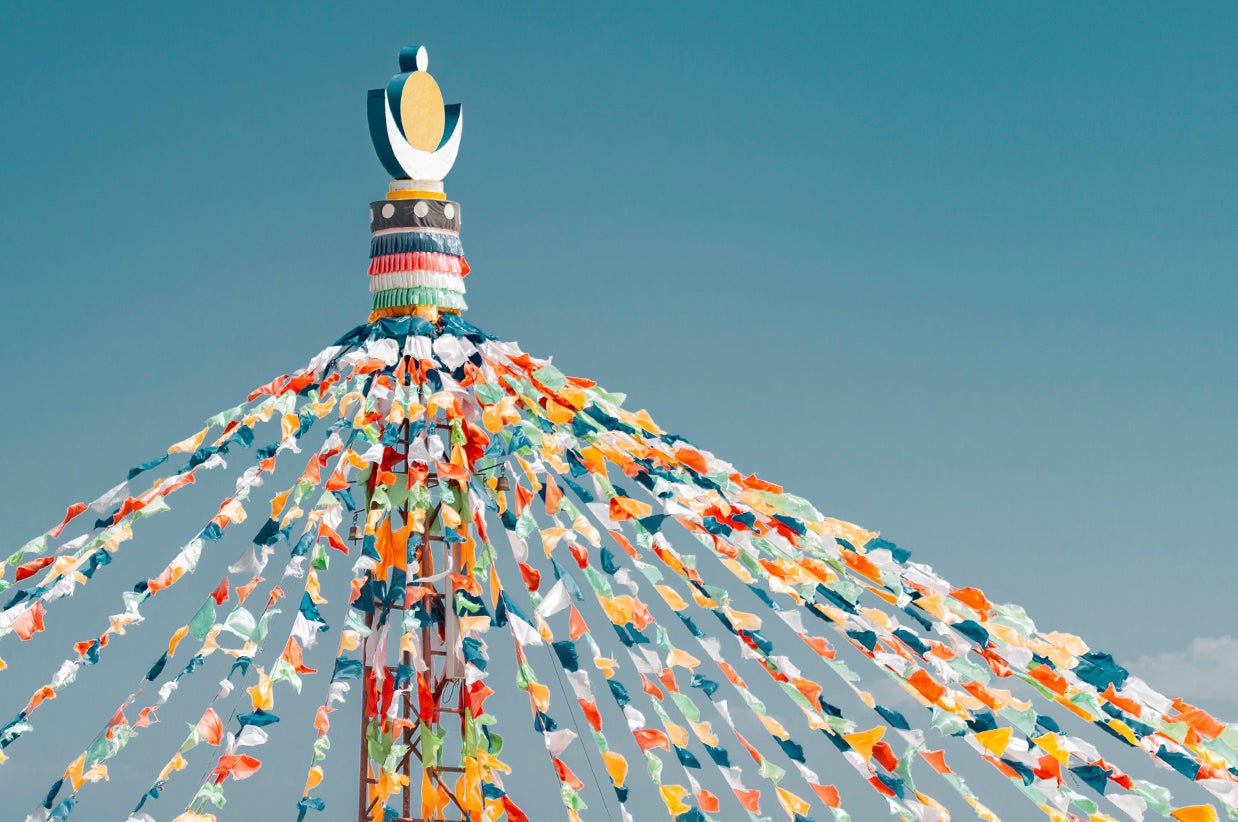
Its guardians are a horseback patrol made up of local herders. They dismantle fences across the grasslands, allowing yaks to roam freely and restore the vitality of the steppe. They make prayer flags from milk and red-earth pigments, returning faith to the land without leaving pollution behind. Crossing frozen ground and mountain passes, they document every spring and stream at its source.

Pure mountains. Pure water. Pure hearts.
“Our generation knows that this place is sacred, but the next generation may forget. If we build a stupa here, people for generations to come will know that there is a spring that must be protected.” Reverence for grasslands, water sources and all living beings has always been part of nomadic culture.
Dondrup, secretary-general of the association, believes that what has preserved the plateau in its present form is nomadism itself. “Nomadic culture is connected to every water source and every season. In the end, all of it comes back to one thing: the natural world that we have protected for generations.” Yet those who truly safeguard this land do not always receive the support they deserve.
Over the past decades, more and more funding has flowed into the Three-River Headwaters region, but very little has reached the people on the ground. Many environmental stewards have limited formal education; they cannot write grant proposals and often lack the means to communicate with the outside world. Even so, they continue, day after day, to patrol the grasslands, rivers and wildlife.

Chugotsang advocates for zero waste, zero pollution and zero excess, while exploring an environmental model capable of sustaining itself. The space is allowed to generate profit, and seventy percent of that income flows back to those who protect this land.
Many artworks inspired by the Three-River Headwaters can be found here, but one piece stands out: The Record of Mountains and Waters of Lungpo. Its creator is a herder and environmental guardian from Lungpo. Riding his motorcycle across the grasslands, he visits spring after spring, then returns home to paint the mountains and waterways he has crossed in the style of traditional Thangka, recording each source stroke by stroke.
One of Charu’s founders, Wuzhi, once said: “What truly made me stay was the reverence for nature that still lives within them.” While volunteering for the association, she wrote a line borrowed from Indigenous wisdom: The shimmering water flowing through streams and rivers is not merely water to us. It is the blood of our ancestors. Here, “blood” speaks not only of the bond passed down between people and the land, but also of those who gave their lives protecting this plateau.
To protect has never meant separating humanity from nature. The ant hidden in the grass, the wild animal roaming the mountains, and the herder crossing the plains all dwell beneath the same sky.

With the arrival of spring, the frozen rivers begin to thaw. The prayers and blessings left upon the ice drift downstream with the current. They cross mountain ranges, carve through valleys, and flow across grasslands and wetlands before merging into mighty rivers that eventually reach plains, lakes and seas. They pass the riverbanks where migratory birds rest, the shallows where fish return to spawn, and the cities illuminated by countless lights. They nourish forests, sustain crops, and give life to all things, allowing civilizations to flourish along their banks. And so, every living being upon this earth shares in a blessing that comes from the source.
Source | GLASS Magazine China
Produced by | Long Zijia, Liu Ke
Photography | Chen Chuanduan
Creative Direction | Morain
Feature Editor & Text | Kaia

Ecrit par charuhimalaya