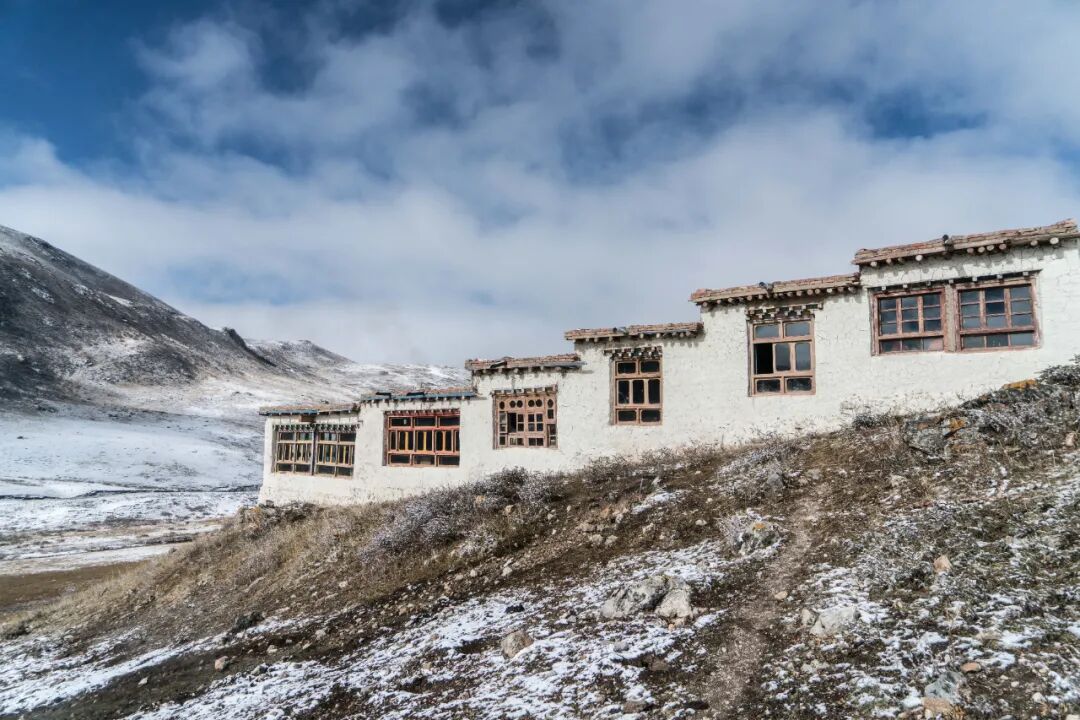
Sayol | Earth’s Veil
Sayol is a Tibetan carpet workshop operated by Tago, a subsidiary of Charu. Rooted in the traditions of Tibetan carpet weaving, Sayol carries this heritage forward through sustainable innovation, enabling women in the headwaters of Asia's three great rivers to choose to live and work in their own communities.
Sayol is a transliteration from Tibetan. Sa (ས) means earth, while Yol (ཡོལ) means veil. To us, every Tibetan carpet is Earth's Veil—the seasons of the plateau, slowly woven into every thread.
Artisans of Tibetan Carpet
Tseyong (47)
Family of four, living off farming and foraging for cordyceps. She knows how to weave black tents and traditional straps, Tibetan boots and knitted socks. Now, she wants to learn Tibetan carpet weaving. To keep the craft alive. To build a better life.

Yongga Dolma (24)
Twenty-four. The youngest in the workshop. She has always loved handcrafts, but since leaving middle school, has only herded on the pastures. With little schooling, it was hard to find a job. She came here to learn the weave, to become a true keeper of her heritage.

Tsultrim Wangmo (41)
She used to stay at home with no steady work. She came to the workshop to master the skills of Tibetan carpet weaving and support her family.

Lhatsho (40)
A relative brought her to the workshop. She didn't think too much about what she'd get out of it. She just wants to focus and learn the craft well.

Choki Dolma (48)
Family of five, relying on cordyceps and her eldest daughter's wages. She believes culture and history live within these handcrafts. Weaving brings her peace. She just wants to learn more.

Wanggyal Dolma (38)
She came to the workshop out of pure love for Tibetan culture. She is not just looking for a paycheck. She is looking to master a true skill.

Menbang (34)
Family of four, supported by cordyceps and her husband's daily labor. She has lived on the pastures all her life, never holding a job. To her, a craft means more choices in life. She wants to complete a piece all on her own and earn her own income.

Tsepamo (37)
Menbang introduced her to the workshop. She hopes her skills keep growing, and her income follows.

Yongzang (42)
A single mother of three, sustaining her family through tailoring and cordyceps. She has woven black tents since she was eighteen. She has also learned traditional tailoring and weaving phrug wool. Handcrafts bring her pure joy. She feels happy when she weaves.

Sonam Yongdzom (34)
Mother of a son and a daughter. She wants to learn fine skills, so she can secure a stable, reliable job.

Yongkyi (49)
Mother of two daughters. She looks forward to a stable job, where both her skills and income can grow together.

Kyidtsho (43)
Family of five, relying on farming, cordyceps, and her husband's renovation work. Before this, she only knew basic knitting and embroidery. She wants to learn this skill while earning a steady livelihood.

Sogyang (39)
Mother of three. A relative introduced her to the workshop. Her only hope is for the artisans to work together as one.

Dolkar (38)
Yongzang brought her to the workshop. She wants to learn the craft deeply and continue weaving at the workshop.

A curtain born of the earth - Honoring mothers as nurturing as the land itself.

Von charuhimalaya