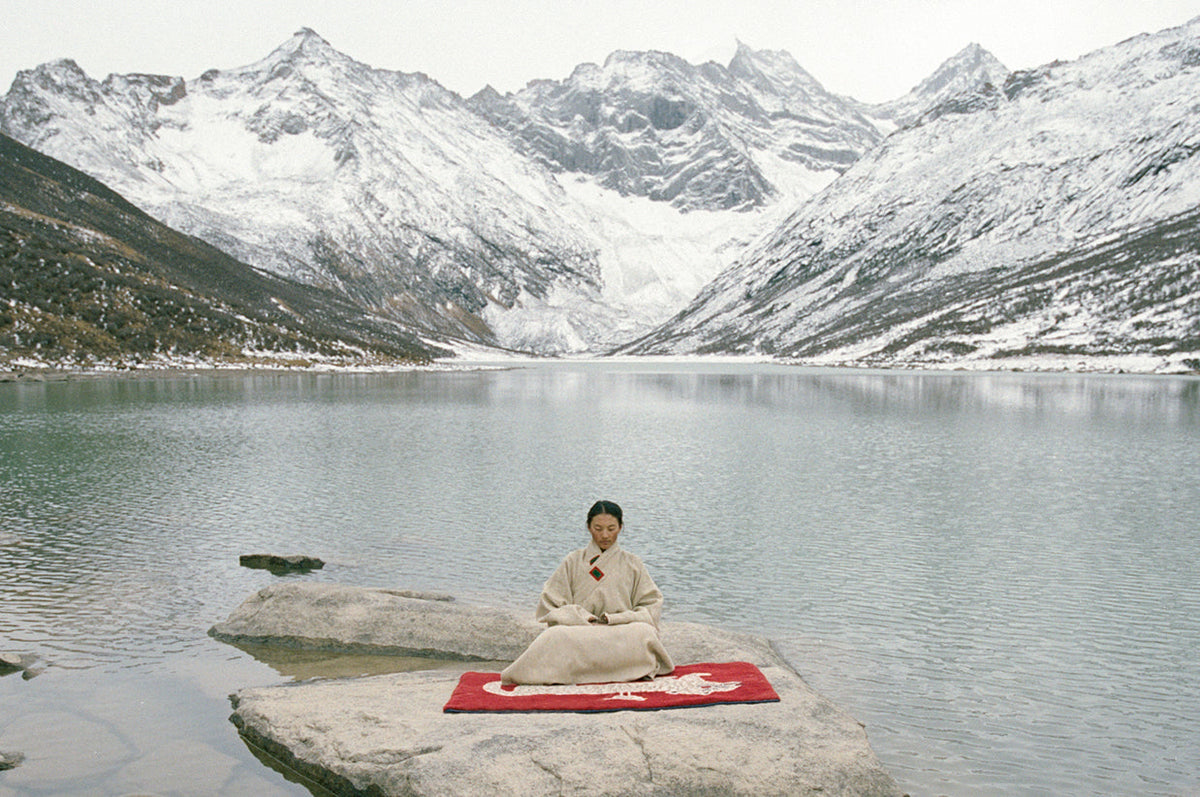
My name is ཆོས་སྒྲོན།

I was born in the Gongga pastoral area of ཟུར་མང་ཆུང་བTownship, Yushu. I am a nomad,like my parents and grandparents, guarding the most ancient way of life on this land. Although I deeply love this grassland, the hardships of life, endless labor, and the loneliness often weigh on me.
I dropped out of school in the fourth grade of primary school to stay home and help my mother shoulder the burdens of herding. My father is rarely home, my brother lives in the city, and my younger siblings are still in school. Only my mother and I face the seasons of wind and snow together. Since the age of eleven, I have been collecting yak dung, milking yaks, and herding, working from dawn until nightfall.

In summer, I wake up at 3 a.m. to milk the yaks, while in winter, I rise a little later. Herding requires selecting good pastures and staying vigilant for wolves and brown bears. Rain, snow, bitter winter winds, and the dampness of summer have all become a part of my life. I know that when I grow old, my legs will likely curve like those of my mother and the women before her, but I accept that as a mark left by the grassland.
My mother is the strongest and most hardworking person I know. She silently endures whatever life brings her, and her resilience has influenced me deeply. Although I couldn’t continue my education, I quickly embraced my role as a nomad and sought to find meaning in this simple, repetitive life.

When I’m alone on the mountains herding, I enjoy writing. At first, I wrote in notebooks, but later I started using my phone’s memo app. Writing has become my emotional outlet, a way to connect with the world. Even though my family and neighbors don’t understand my passion for writing and photography, I persist, hoping that these records can bring light to my life.
My Room
The grasslands are vast, and the days in the pastoral areas are long. People are always curious about others‘ lives. I’ve heard many outrageous rumors about myself. Once, a photographer from the mainland took my picture, and the neighbors spread the rumor that I had fallen in love with an old man from the mainland and made a lot of money from him.

Others said that QiuZhuo was always taking photos and posting them online, overestimating her abilities, as even many college students couldn‘t make a name for themselves.
Facing these gazes, my only refuge is my bedroom. Virginia Woolf mentioned “a room of one’s own”in her book, and fortunately, I have my own little space.

Though small, this room was built by me bit by bit. Starting with the bed, table, and chairs, every time I went to the city, I would add some affordable and durable furniture. Once the basic infrastructure was complete, I began to buy books. The bookshelf is filled mostly with Tibetan poetry collections, along with some essays I enjoy. My favorite writer is Sanmao. Everyone goes through a phase of liking Sanmao while growing up, and I have carried this fondness into my present. Sanmao taught me that recording daily life poetically is a form of romance, and I wish to carry this romance through to the end.
Besides books, the room also contains coffee and a camera. These few square meters are my universe. Here, I am not the nomad woman QiuZhuo, nor my mother‘s assistant; I am simply myself, guarding my own QiuZhuo. Here, my heart is a lake, Reflecting the grasslands, flowers, rivers, and starry seas.

The grasslands are vast and lonely. My world is a monologue, but I have chosen to embrace solitude. I remind myself not to let life break my spirit, not to let worries clip my wings, and not to let the light in my eyes fade.
I know my destiny is tightly intertwined with this land. I will continue to herd, to write, to capture moments with my camera, and to seek meaning in my life. Perhaps I am destined for solitude, but I will walk alongside it, witnessing every sunrise and sunset on this grassland.

Von charuhimalaya